

If you’ve ever planted a garden and thought, “Why do my plants look tired?”—the answer is often the soil.
Soil isn’t just dirt. It’s a living system made of minerals, air, water, and tiny organisms. When that system is healthy, it does a lot of work for you: it holds moisture, makes nutrients available, and grows stronger every season.
And here’s the best part: you don’t need expensive products to improve your soil. You just need a few easy habits that help soil stay alive and well-fed.
What “Soil Health” Really Means (in plain English)
Healthy soil is soil that can:
-
Hold water without turning into mud
-
Drain well so roots don’t rot
-
Feed plants slowly over time
-
Support soil life (worms, fungi, helpful microbes)
-
Stay crumbly and loose so roots can grow easily
When soil is unhealthy, you’ll notice:
-
Hard, crusty ground that’s tough to dig
-
Water pooling on top or running off
-
Plants that stay small or yellow even with fertilizer
-
Lots of weeds taking over
-
Dry soil that needs constant watering
The “Soil Food Web” (tiny helpers you actually want)
Your soil has a whole underground community:
-
Bacteria help break down organic matter fast
-
Fungi move nutrients and water through the soil like tiny highways
-
Worms loosen soil and leave behind nutrient-rich castings
-
Microbes help turn compost and plant debris into plant food
When you feed the soil, you’re really feeding them—and they feed your plants.
The 3 Big Soil Rules (the simple version)
If you only remember three things, remember this:
1) Add organic matter
Organic matter is the main “food” that helps soil life thrive. It improves almost every soil problem.
2) Keep the soil covered
Bare soil dries out, bakes in the sun, and washes away in heavy rain.
3) Disturb it less
The more you dig and till, the more you break up the natural soil structure and damage helpful fungi.
Step 1: Learn What You’re Starting With
Before you “fix” your soil, it helps to know what kind you have.
Do this quick at-home soil check
Grab a handful of slightly damp soil and squeeze it:
-
If it forms a hard ball and stays tight: likely clay-heavy (holds water, can compact)
-
If it falls apart instantly: likely sandy (drains fast, dries out quickly)
-
If it forms a ball but breaks apart with a tap: you’re close to “loamy” (great garden soil)
Bonus: Consider a basic soil test
A simple soil test can tell you:
-
pH (how acidic or alkaline your soil is)
-
if you’re low in nutrients like phosphorus or potassium
If your plants struggle year after year, a soil test is one of the smartest moves you can make.
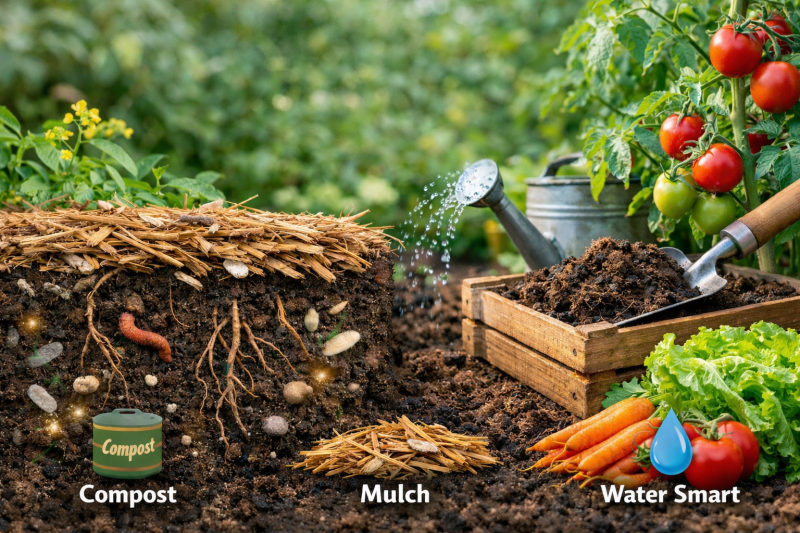
Step 2: Feed the Soil With Compost (Your #1 Best Tool)
If soil health had a “magic ingredient,” it would be compost.
Compost:
-
Adds nutrients slowly
-
Improves texture (helps clay loosen + helps sand hold moisture)
-
Feeds soil organisms
-
Helps plants handle heat and stress better
How to use compost (easy method)
-
Add 1–2 inches of compost on top of your garden bed
-
Mix it into the top few inches lightly, or just top-dress and let worms do the work
-
Repeat once or twice a year (spring and/or fall)
No compost? Use what you can
Even small amounts help. You can also use:
-
bagged compost (look for “finished compost”)
-
leaf mold (rotted leaves)
-
well-aged manure (aged properly, not fresh)
Step 3: Mulch Like You Mean It
Mulch is like a protective blanket for your soil.
Mulch helps:
-
Keep moisture in
-
Keep soil cooler in summer and warmer in cool weather
-
Prevent weeds
-
Reduce erosion (soil washing away)
-
Feed the soil as it breaks down (especially natural mulches)
Good mulch choices (beginner-friendly)
-
Shredded leaves
-
Straw (not hay—hay has seeds)
-
Untreated grass clippings (thin layers only)
-
Pine needles (fine for most gardens)
-
Wood chips (best for paths and around perennials; use carefully in veggie beds)
Simple rule: Keep mulch a couple inches away from plant stems so it doesn’t trap too much moisture right at the base.
Step 4: Water Smarter (Because Overwatering Hurts Soil Too)
Soil health and watering are connected. Too much water can:
-
push air out of the soil (roots need oxygen)
-
cause rot and fungus issues
-
wash nutrients deeper than roots can reach
Too little water can:
-
kill off microbes and slow soil activity
-
cause plants to stop growing
The easiest watering habit
Water deeply and less often.
A simple test:
-
Stick your finger 2 inches into the soil
-
If it’s dry at that depth, water
-
If it’s still damp, wait
Mulch makes this 10x easier because it slows evaporation.
Step 5: Stop “Overworking” Your Soil
A lot of gardeners were taught to dig and turn soil constantly. But healthy soil is like a layered cake—it works better when it stays structured.
Try this instead
-
Use a hand fork or broad fork to loosen soil without flipping it
-
Mix compost into the top few inches only
-
Let roots and worms do the deep work
Less digging = better structure = better water + better roots.
Step 6: Grow Plants That Improve the Soil
Plants can feed the soil too.
Two easy options
1) Cover crops (best if you have an off-season)
Cover crops protect soil, reduce weeds, and add organic matter. Good beginner choices:
-
clover
-
oats
-
rye (great for winter protection)
2) “Chop and drop” leaves (easy version)
When your plants finish, cut them at the base and leave roots in the soil. Roots break down and improve soil structure.
Common Soil Problems (and easy fixes)
“My soil is hard like brick.”
Likely: compaction + low organic matter
Fix: compost + mulch + less digging; add pathways so you’re not stepping on beds
“My soil dries out fast.”
Likely: sandy soil or exposed soil
Fix: compost + mulch; add organic matter regularly
“My soil stays wet and sticky.”
Likely: clay soil + poor drainage
Fix: compost + raised beds; avoid working soil when it’s wet; add mulch to stop crusting
“My plants look yellow.”
Could be: low nitrogen, poor drainage, or pH issues
Fix: compost first; then consider a soil test to avoid guessing
A Simple Weekly Soil Routine (5 minutes)
Do this once a week during the growing season:
-
Check moisture 2 inches down
-
Pull small weeds before they seed
-
Fluff mulch if it’s packed down
-
Top-dress a thin layer of compost mid-season if plants look hungry
-
Add leaves/plant scraps to a compost pile for next season
That’s it. Small habits build amazing soil over time.
Quick Start Checklist: Healthy Soil Basics
If you want a super simple plan, start here:
-
Add 1–2 inches of compost in spring
-
Mulch after planting (2–3 inches)
-
Water deeply, not daily
-
Don’t leave soil bare
-
Dig less; disturb soil less
-
Add compost again in fall (optional but great)
Final Thought: Feed the Soil First
When you feed the soil, your garden becomes easier:
-
fewer problems
-
less watering
-
stronger plants
-
better harvests
-
better flavor
Healthy soil is the slow-and-steady secret behind a garden that keeps improving every year.
Call to Action (S2T-friendly)
Add comment
Comments