

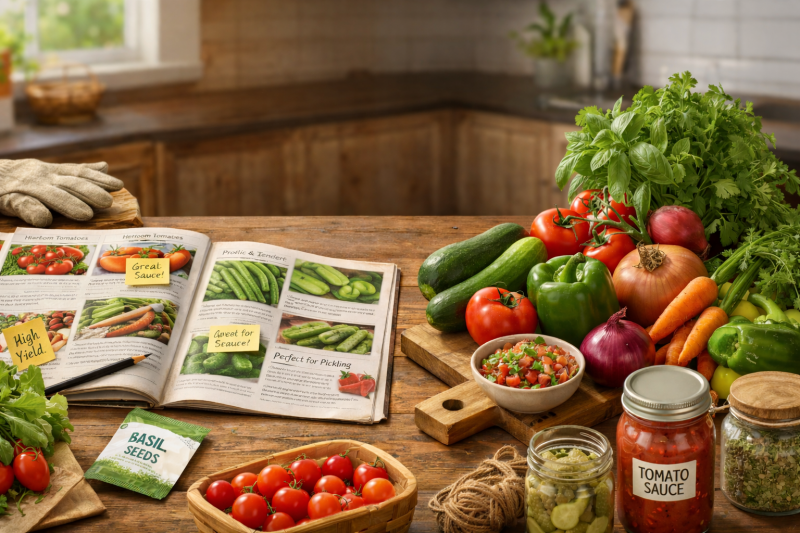
If you’ve ever circled half a seed catalog and then felt stuck, you’re not alone. Seed catalogs make everything look amazing. But here’s the truth: the best seeds aren’t the “prettiest” ones — they’re the ones that match how you really eat.
This post will help you choose vegetables you’ll actually cook. Not just grow.
Step 1: Start in the Kitchen, Not the Garden
Before you pick seeds, take a quick look at your real-life meals.
Ask yourself:
- What do I cook every week?
- What vegetables do I buy over and over?
- What do I wish was fresher or cheaper?
- What do I love eating, but hate paying for?
Quick shortcut
Think in these “meal buckets”:
- Salads & sandwiches: lettuce, tomatoes, cucumbers, onions, peppers
- Tacos & bowls: peppers, onions, tomatoes, cilantro, radishes
- Pasta & Italian: basil, tomatoes, zucchini, peppers
- Stir-fry: peppers, snap peas/green beans, onions, herbs
- Comfort food: potatoes, carrots, onions, greens
Pick seeds that match your buckets. That’s how you avoid growing stuff that sits in the fridge until it goes soft.
Step 2: Choose 5 “Staple Veggies” First
A simple rule that works: pick five vegetables you know you’ll use.
Here are common “staple” picks that fit a lot of kitchens:
- Tomatoes
- Peppers
- Cucumbers
- Zucchini (or yellow squash)
- Green beans
If you’re new to gardening, these are a strong start because they’re useful, and they keep producing (especially tomatoes and peppers).
Step 3: Read Seed Descriptions Like a “Food Label”
Seed catalogs use a lot of exciting words. Here’s what actually matters for cooking.
Words that help you cook more
- “Reliable” / “high yield” = more food
- “early” = faster harvest (great for impatient gardeners)
- “tender” = better texture for fresh eating
- “sweet” = better raw, roasting, or snacking
- “good for sauce” = thicker tomatoes, less watery
- “stores well” = you can keep it longer after harvest
Words to watch (not bad — just a heads-up)
- “Huge” / “giant” = fun, but can be harder to use up
- “Very productive” = great, but you’ll need a plan for extras
- “Vining” = needs space or a trellis
- “Late season” = takes longer, not ideal if your season is short
Step 4: Pick the Right Variety for How You Cook
This is the part most people skip — and it makes all the difference.
Tomatoes: pick based on what you make
- Slicing tomatoes → sandwiches, burgers
- Cherry/grape → salads, snacks, roasting
- Paste/Roma → sauce, salsa, freezer cooking
If you only grow one type, a cherry tomato is the easiest and most useful for everyday meals.
Peppers: choose your “heat level”
- Bell → stuffed peppers, fajitas, salads
- Banana / sweet frying → sauté, sandwiches, pickling
- Jalapeño → salsa, nachos, poppers
- Cayenne / hot types → drying, seasoning, spicy dishes
If you love cooking, peppers are a great “value” crop.
Greens: grow what you actually eat
- Lettuce = easy, fast, fresh salads
- Spinach = fast, good raw or cooked
- Kale = tough and long-lasting (good for soups)
- Collards = classic cooked greens
Pick one. Don’t grow all four unless you know you’ll use them.
Step 5: Don’t Skip Herbs (They Make Everything Taste Better)
If you cook at home, herbs are one of the smartest things to grow.
Best “cook-friendly” herbs:
- Basil (pasta, salads, sandwiches)
- Cilantro (tacos, bowls, salsa)
- Parsley (soups, potatoes, everything)
- Chives (eggs, dips, potatoes)
- Dill (pickles, salads, sauces)
Herbs are also great in containers, so they’re perfect even if your garden space is small.
Step 6: Make a “Use-It Plan” for Extra Harvest
A garden can produce a lot. The trick is having a plan before it hits all at once.
Easy ways to use extras:
- Freeze chopped peppers and onions for cooking
- Roast and freeze tomatoes for sauces later
- Pickle cucumbers, onions, and peppers
- Dry herbs and hot peppers
- Make a “one-pan veggie mix” (zucchini + onions + peppers) and freeze it
If you plan to preserve even a little, you’ll waste way less.
Quick “Choose This If You Cook That” Guide
If you cook…
Grow these veggies
Why it works
Tacos / bowls
peppers, onions, tomatoes, cilantro
you’ll use them constantly
Salads
lettuce, cucumbers, cherry tomatoes, herbs
fast harvest + fresh taste
Pasta
basil, tomatoes, zucchini
easy weekly meals
Stir-fry
peppers, green beans, onions
quick cooking + steady harvest
Soups
kale/collards, carrots, onions, herbs
great flavor + meal prep
Beginner “Small Garden” Starter List (Simple and Useful)
If you want to keep it easy, choose:
- Cherry tomato (1 plant)
- Sweet pepper (1–2 plants)
- Cucumber (1 plant with trellis)
- Zucchini (1 plant)
- Basil + parsley (containers)
That’s a strong mix for real cooking without feeling overwhelmed.
Common Seed Catalog Mistakes (So You Don’t Waste Money)
- Buying too many varieties “just because they look pretty”
- Growing vegetables you don’t normally eat
- Planting too much of one crop (hello, 47 zucchini)
- Forgetting space needs (especially vining plants)
- Not planning how you’ll use extras
A simple plan beats a big plan every time.
A Simple Challenge: Pick 10 Meals, Then Pick Seeds
Try this today:
- Write down 10 meals you cook or love (tacos, salads, spaghetti, stir-fry, etc.).
- Circle the veggies in those meals.
- Choose seeds based on that list.
That’s the “seed catalog to supper” method.
Wrap-Up
The best garden is one that fits your life. If you choose seeds based on what you actually cook, you’ll harvest more, waste less, and enjoy it more.
And next year? You’ll know exactly what to buy again — because you used it.
If you want to make this even easier, use a simple seed tracker or planting plan so you remember what you planted, what you liked, and what you’ll grow again next season.
FAQ
What are the best vegetables to grow if I like cooking?
Tomatoes, peppers, onions, herbs, zucchini, cucumbers, and green beans fit many meals.
How do I choose seed varieties from a catalog?
Pick based on how you cook (salads, sauces, stir-fry, etc.), then look for words like “tender,” “sweet,” “good for sauce,” and “high yield.”
What should beginners grow first?
Cherry tomatoes, sweet peppers, cucumbers (with a trellis), zucchini, and easy herbs like basil and parsley.
Add comment
Comments